What That Sewer Smell in Your Home Actually Means (And How to Fix It)
Metro Atlanta’s Residential Plumbers
A sewer smell in the house is never something to ignore. Whether the odor appeared suddenly or has been getting stronger over time, that smell usually means something is wrong in your plumbing system. If you are asking, why does my house smell like sewer, the answer often comes down to a specific issue that needs to be identified and fixed before it gets worse.
The good news is that most sewer odor problems have a clear source. The challenge is figuring out whether the smell is coming from a dry drain, a damaged toilet seal, a venting issue, or a more serious problem hidden in your drain or sewer line. Understanding the possible causes is the first step toward getting rid of sewer smell in the house and restoring a cleaner, healthier home.
Quick Diagnostic: Where’s That Smell Coming From?
Use this flowchart to help narrow down the likely source:
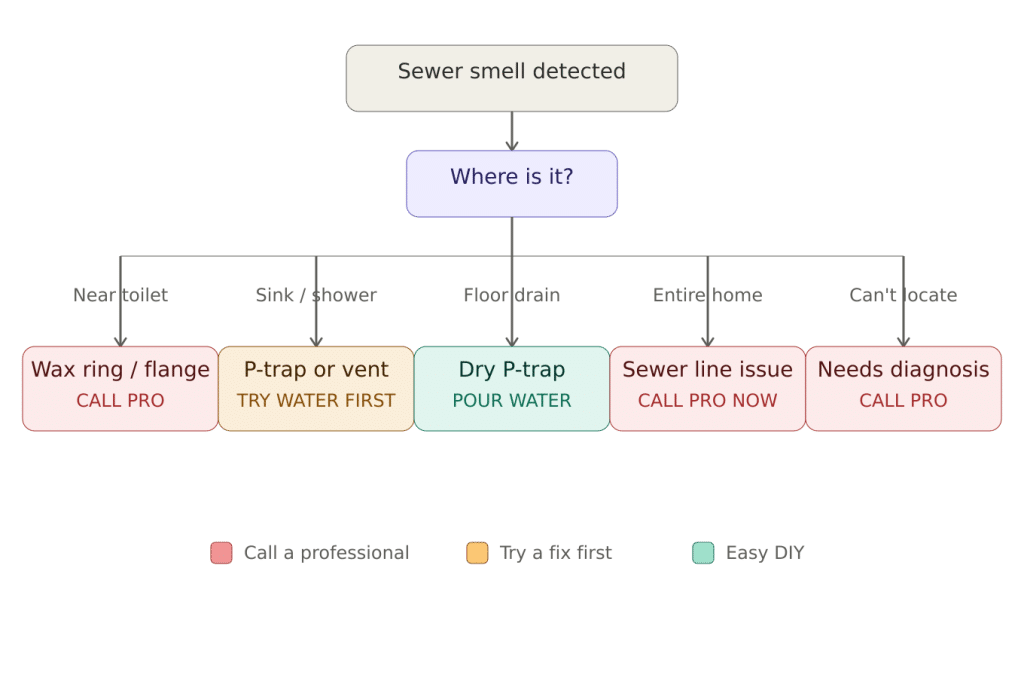
While this flowchart can point you in the right direction, identifying the exact source often requires professional expertise and diagnostic equipment. Let’s look at each potential cause in detail.
What Causes Sewer Smell in the House?
Dry P-Traps
Every sink, shower, tub, and floor drain in your home has a P-trap. This curved section of pipe holds a small amount of water that acts as a seal between your home and the sewer system. When the drain is used regularly, the seal stays in place. When it sits unused for too long, that water can evaporate.
This is one of the most common answers to the question, what causes sewer gas smell in house. It often happens in guest bathrooms, basement floor drains, or spare showers that go unused for weeks at a time. P-traps can dry out in 2-4 weeks without use.
A simple way to test for this problem is to pour water down the drain and see whether the smell improves. If residue is contributing to the odor, use baking soda and vinegar to clean the drain effectively. If it does, you have likely found the source. In many cases, the fix is as simple as pouring 1 gallon of water monthly into infrequently used drains. Sink overflow drains should also be cleaned regularly, especially at a bathroom sink, to prevent odors.
Damaged Wax Ring or Broken Toilet Flange
If the smell is strongest near a toilet, the issue may be a worn wax ring or damaged toilet flange. These parts work together to create a seal between the toilet and the drain pipe. When that seal fails, sewer gas can escape around the base of the toilet and into the room.
Common signs include odor near the toilet, slight rocking when the toilet is touched, or staining around the base. Because this repair usually requires removing the toilet and resealing the connection properly, it is often best handled by a plumber.
Failed Air Admittance Valves (AAVs)
Some homes use air admittance valves instead of traditional vent pipes in certain areas. These valves help regulate airflow in the plumbing system while keeping sewer gas from escaping. When one fails, it can allow sewer odor into the home or cause slow drainage and gurgling at nearby fixtures.
This issue is often found around kitchen island sinks or other fixtures where standard venting is more difficult. If you are noticing odor and drainage issues in the same area, a failed valve may be part of the problem.
Improperly Vented Drain Lines
Your plumbing system depends on plumbing vents to regulate air pressure and maintain proper airflow through the drainage system so wastewater moves efficiently and the water seals inside each drain stay intact. When a clogged vent pipe or blocked sewer vents restrict that balance, the system can create pressure problems that pull water out of the traps or force sewer gas through weak points in the plumbing.
These issues are harder to identify without a professional inspection because vent lines are often hidden behind walls or routed through the roof. Roof vents should be inspected, since debris in sewer vents can create negative pressure and push sewer gas odors back into the home. If the smell is persistent and no obvious drain or toilet issue can be found, venting problems may be involved. Clearing obstructions can restore proper airflow and help prevent sewer gas odors.
Cracked Sewer Pipes or Fittings
In older homes, pipe material matters, especially where aging cast iron or other metal piping has begun to corrode and let sewer gas escape from cracked or weakened drain lines. Over time, these pipes can deteriorate enough to create leaking pipes that release odor into walls, crawl spaces, basements, or other hidden areas of the home. A damaged sewer line can also cause odors, backups, and hidden sanitation issues.
This type of problem often causes more than just unpleasant smells. It can also lead to leaks, water damage, and sanitation concerns. If the odor seems to move throughout the house or appears near walls and lower-level areas, damaged piping may be the cause and may require professional inspection for issues like tree root intrusion or, in severe cases, collapsed sewer lines.
Sewer Line Backup or Blockage
Clogged pipes or a clogged drain can block venting and force sewer gas back through drains and fixtures. Instead of exiting through the vent system, the gas may come back through your drains and fixtures if a blockage is forming in the drain line. This can create odor throughout the home and is often one of the more urgent explanations for a sewer gas smell in house.
Other warning signs may include slow drains in multiple rooms, gurgling sounds from toilets or sinks, or sewage backing up into lower-level fixtures. Sewage backup can result from tree root damage or other major obstructions in the line. If more than one drain is acting up at the same time, your main sewer line may need immediate attention. To help prevent this, use drain strainers to catch debris and enzyme-based drain cleaners to digest odor-causing organic buildup before it restricts water flow.
How to Get Rid of Sewer Smell in House
If you are trying to figure out how to get rid of sewer smell in your home, the right solution depends on what is causing it, and the right fix may involve a kitchen sink, bathroom sink, or laundry room drain depending on where the sewage smell is strongest.
In some cases, the fix is simple. A dry P-trap may only need water added back into the drain. An odor near a specific toilet may point to a failed seal. Built-up soap scum and natural debris inside drains can also create foul odors even without a major sewer line issue. But if the smell continues after basic troubleshooting, or if you notice other plumbing issues along with the odor, it is time for a more complete inspection.
Trying to fix the wrong problem can waste time and money while the real issue continues to worsen behind the scenes. If you are unsure how to get rid of sewer gas smell, a professional diagnosis is the fastest way to eliminate sewer odors and get the right repair underway.
Why Professional Diagnosis Matters
Sewer smells can seem straightforward, but they often stem from common causes of sewer issues that look similar at first, and accurately identifying the source may require experience and specialized equipment that homeowners don’t have access to.
A dry P-trap is obvious once you know to look for it. But distinguishing between a failed AAV, improper venting, and a cracked pipe hidden in a wall? That takes professional diagnostic skills.
Professional plumbers can:
- Run camera inspections inside your drain lines to identify cracks, blockages, damaged sewer lines, or tree root intrusion
- Test your vent system to ensure proper function
- Use smoke tests to identify exactly where sewer gas is entering your home
- Assess whether odors indicate minor repairs or serious system problems
- Schedule routine sewer line inspections every 2-3 years for modern plumbing to catch developing problems before they create persistent odors
Trying to fix the wrong problem wastes time and money while the actual issue continues to affect your home and potentially worsen.
If you’re dealing with persistent sewer odors and can’t identify the source, professional testing can identify sewer gas leaks and other hidden plumbing issues affecting multiple plumbing fixtures. Contact Serv’All Plumbing at (678) 968-0132. We’ll identify exactly where the smell is coming from and provide clear options for fixing it permanently.
Why Sewer Odor Problems Are Common in Older Metro Atlanta Homes
Some plumbing systems in the Metro Atlanta area are more vulnerable to sewer odor issues than others. Older homes often have cast iron drain pipes or aging sewer lines that are more likely to crack, corrode, or separate over time. Some properties may also still have a septic system or septic tank components that need routine maintenance to control sewage odors. In some cases, older clay sewer lines can also develop root intrusion or structural issues that affect both drainage and odor control.
Seasonal conditions can also play a role. During hot, dry weather, water can evaporate more quickly from unused drains, increasing the chance of sewer odor entering the home through dry P-traps. Homes with guest bathrooms, basement drains, or little-used fixtures may be especially prone to this issue. Regular use of these fixtures helps prevent sewer odors by keeping drain traps filled. Older sewer lines with root intrusion or deterioration are also more prone to unpleasant odors and hidden gas leaks.
When to Call a Plumber Immediately
Some sewer odor problems can be solved quickly. Others should be addressed right away by a professional.
Contact a professional plumber right away if:
- The smell is strong and present throughout your home, which can point to sewer gas exposure and related health hazards
- You notice sewage backing up into drains or toilets
- Multiple drains are slow or gurgling
- You see water damage or staining around fixtures
- The smell appeared suddenly and you can’t identify an obvious source
- You’ve tried simple fixes (running water in drains) with no improvement
- You suspect cracked pipes or sewer line problems
Sewer gas contains methane and hydrogen sulfide. A rotten egg smell or smell like rotten eggs can mean a rotten egg odor from sewer gas, and hydrogen sulfide is toxic in high concentrations. Sulfur bacteria in a water heater can also cause a rotten egg odor, especially when you run hot water taps. While brief exposure to low levels is unpleasant but not immediately dangerous, ongoing exposure can occur from gas leaks or sewer gas leaks and may cause headaches, nausea, and respiratory issues. More importantly, the problems causing the odors can worsen rapidly, leading to sewage leaks and expensive damage. Running unused drains frequently helps prevent P-trap evaporation and lowers the chance of sewer gas leaks.
What to Expect from Professional Service
When you call Serv’All Plumbing for sewer odor problems, we start by asking about your specific situation. Where is the smell strongest? When did it start? Have you noticed any other plumbing issues?
We then systematically check your fixtures, drain traps, sewer vents, and hidden leaks that may be affecting indoor air quality to identify the source. In many cases, we can pinpoint and fix the problem during the initial visit. For more complex issues involving hidden pipes or main sewer lines, we may recommend camera inspection to see exactly what’s happening inside your plumbing system. Tests may also be used for preventing sewer gases from escaping during diagnosis and repair.
Once we’ve identified the problem, we explain what we found, why it’s causing odors, and what’s needed to fix it to eliminate lingering odors. The repair plan may include clearing blocked vents, repairing leaking pipes, or correcting drain issues to improve fresh air and indoor air quality. We provide upfront pricing before any work begins, so you can make informed decisions without surprises.
Address Sewer Smells Quickly
Sewer odors in your home need prompt attention for both comfort and health reasons. Whether your problem is a simple dry P-trap or a more serious issue with your drain system, identifying and fixing the source quickly restores your home’s comfort and protects your family’s health.
Serv’All Plumbing has been solving plumbing problems for Metro Atlanta homeowners for over 30 years. We have the diagnostic equipment and experience to identify even the most elusive odor sources and the expertise to fix them properly the first time.
Ready to eliminate that sewer smell for good?
Call (678) 968-0132 for fast, professional diagnosis and repair, or request your free estimate online. We serve homeowners throughout Acworth, Marietta, Kennesaw, Roswell, and surrounding Metro Atlanta communities with the honest answers and effective solutions you need.